Dr. Gymbro
←

#exercise performance

1 article
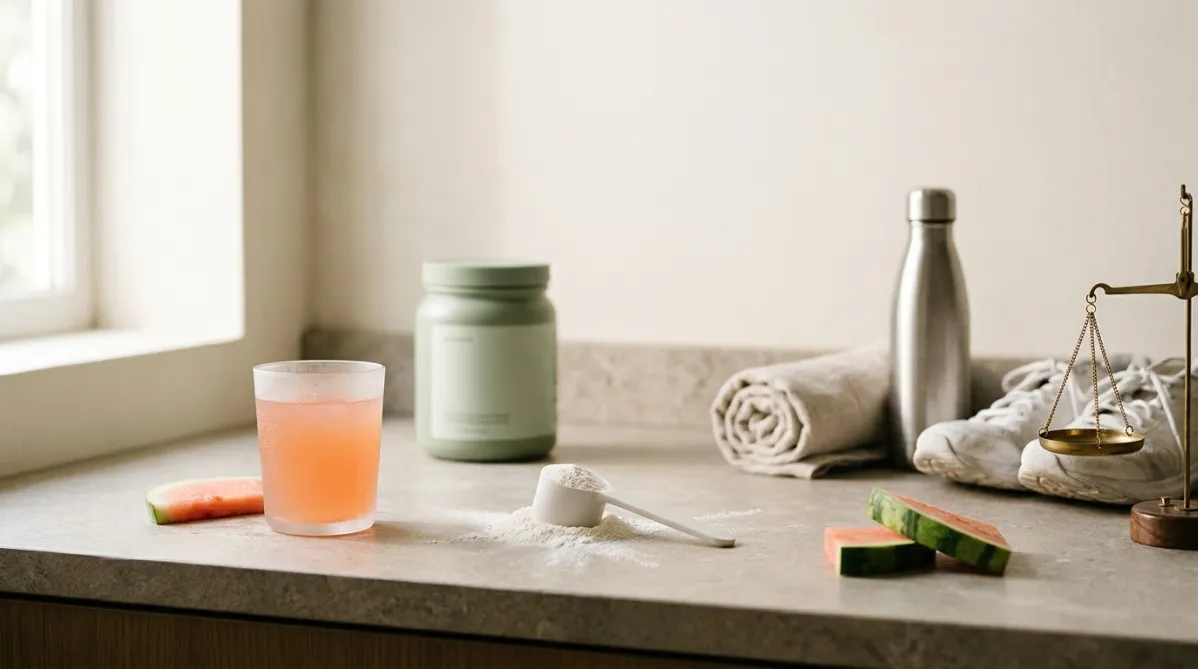
A wide landscape editorial photograph shot from slightly above, showing a clean matte stone countertop in soft morning light. On the left, a single frosted glass tumbler of pale pink-orange watermelon-colored drink sits with condensation beads on its surface, a thin slice of watermelon resting beside it. In the center, a minimalist matte white scoop rests on a small pile of fine white powder, with a few grains scattered naturally across the surface. Behind it, a blurred matte sage-green supplement tub with no legible text stands slightly out of focus. On the right, a neat arrangement of gym elements: a rolled linen towel, a slim stainless steel water bottle, and a pair of worn white running shoes with soft shadows. A small brass balance scale sits at the far right edge, one pan slightly higher than the other, hinting at weighing evidence versus hype. Scattered across the counter are a few cut watermelon rind wedges in vivid green and coral pink, adding natural color accents.

The color palette is warm and restrained: cream, soft blush pink, sage green, and warm gray, with a single pop of coral. Light enters from a window on the left, casting long, gentle diagonal shadows and a subtle highlight on the glass. Shallow depth of field with creamy bokeh in the background. Composition leaves generous negative space across the upper third and right side for headline text overlay. Style resembles a modern wellness magazine or trendy health journal cover: calm, tactile, minimal, slightly muted film-like grain, natural textures such as linen, stone, and glass. No people, no text, no logos, and no futuristic elements.
supplements

Citrulline Malate – hype czy pomoc? Co mówią 30 badań

BY DR. GYMBRO ·

Citrulline malate jest stałym składnikiem wielu mieszanek przedtreningowych, ale jak duża jest jego rzeczywista skuteczność? Najnowsza meta‑analiza trójpoziomowa, obejmująca 30 randomizowanych badań z udziałem 644 osób, wykazała jedynie niewielki ogólny wzrost wydajności (Hedges' g = 0,16). Przedziały predykcyjne były szerokie, pewność GRADE niska do bardzo niskiej, a subiektywne odczucie zmęczenia nie uległo zmianie. Jednorazowe dawkowanie wydawało się stabilniejsze niż chroniczne, pojawiły się sygnały dotyczące wytrzymałości aerobowej i krótkich zadań anaerobowych, jednak nie były one przekonujące. Oto, co to oznacza dla dawki, czasu przyjmowania i czy warto się tym przejmować.

This page is available in